
Jim's Tips For Outback Builds, Tire Fitment, Trail Cleanups, and How to Avoid Hydrolocking Your Engine
By Ben Boxer
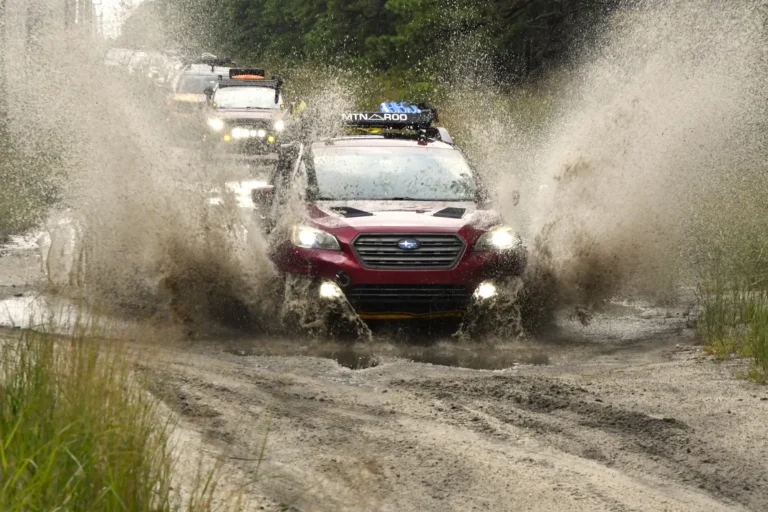
There is a certain moment that happens when you start taking your Subaru off-road. You hit a few puddles. They’re fine. Then you hit a bigger one. Also fine. And somewhere in your brain, a switch flips: “Yeah, this thing is unstoppable.” That is usually right before something expensive happens.
In a recent interview, I sat down with my friend Jim (@littlerubysubie on Instagram) to talk about his off-road Outback build. We chatted about his mods, proper trail safety, and a VERY expensive trail day that cost him a new engine.
Check out the details of his build below and then feel free to watch the entire interview HERE.
Meet Jim’s 2015 Outback
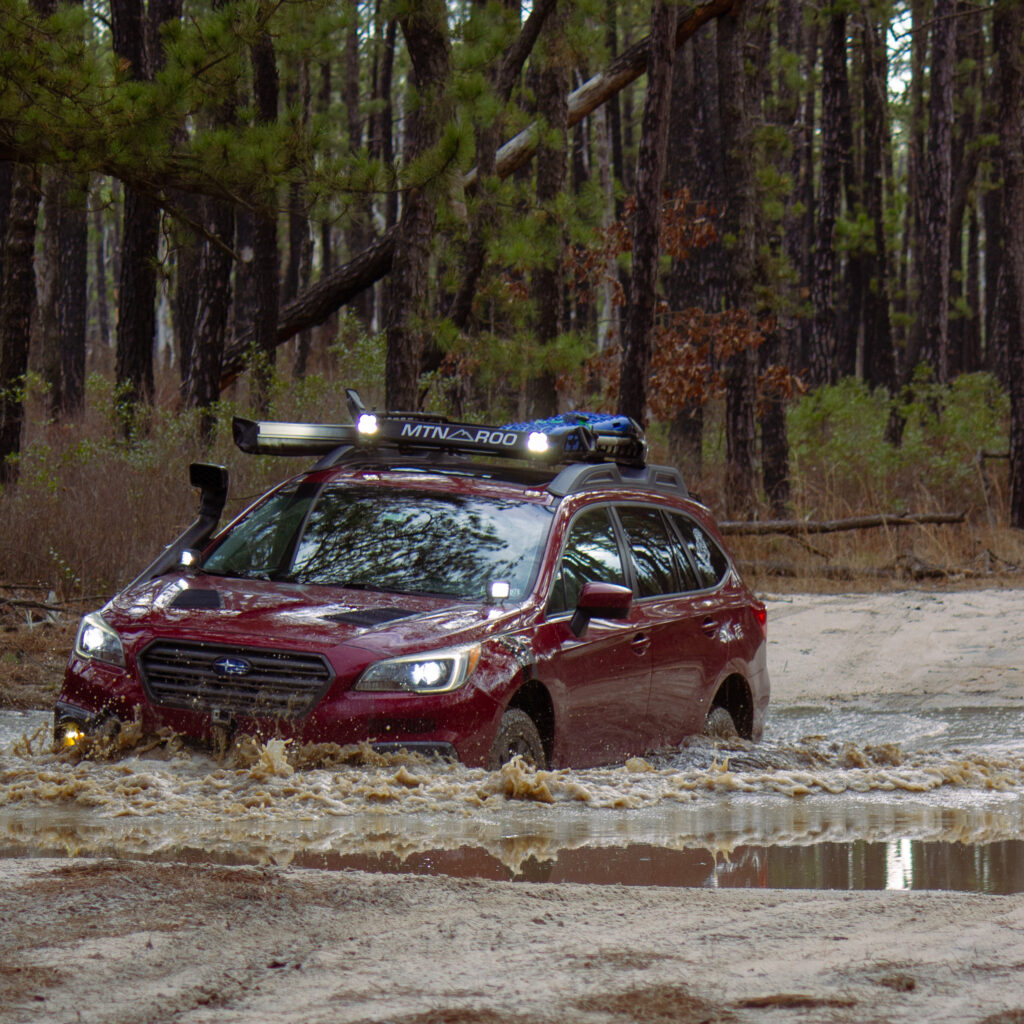
Jim’s build is the kind of build I respect immediately. Not because it’s flashy. Not because it’s some crazy high dollar setup. But because it’s practical and doable for the average person.
It’s a 2015 Outback that gets used, beaten on, fixed, and then used again. Almost everything on the car has been done in his driveway. No shop build. No shortcuts. Just time, effort, and figuring things out as you go. That alone puts it in a different category for me.
This is not a “park it at Cars and Coffee” Subaru. This is “a load the kids up, go hit trails, drag trash out of the woods” kind of Subaru. And honestly, that’s exactly what these cars are good at.
Key Mods On The Subaru:
While Jim’s Outback has a long list of mods and accessories, here are the ones that stuck out to me.
- 2 inch spacer lift
- Kings Springs in the rear
- Custom rear tire carrier
- 245/65R17 Milestar AT Pro tires
- Custom snorkel
- Spiked Performance hood louvers
What Off-Roading a 5th Gen Outback Actually Looks Like
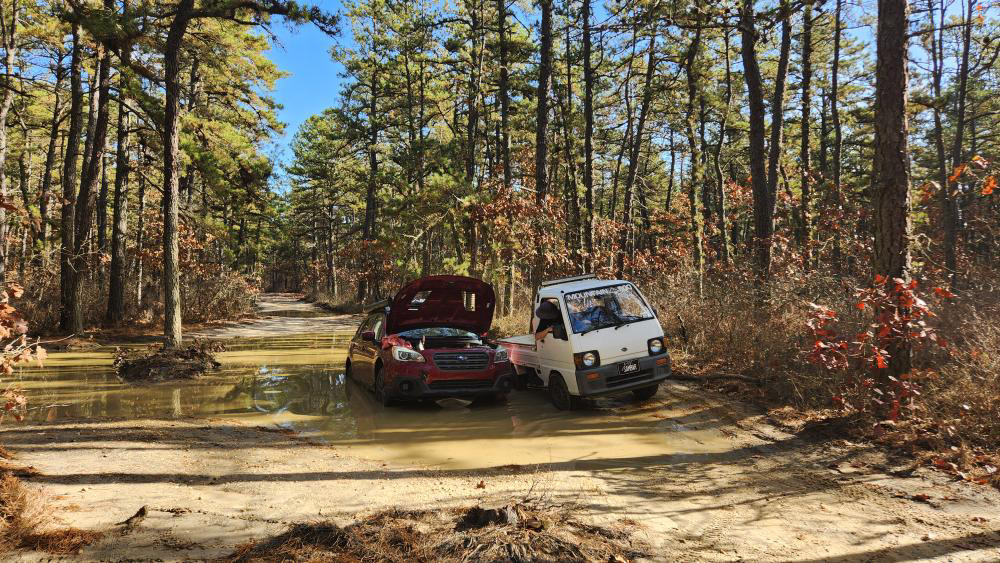
A lot of people still underestimate these cars – especially the 5th gen Outback. But once you actually get them into the right environment, they start to make a lot more sense.
Jim is wheeling in the kind of terrain that will expose any weakness pretty quickly. Sand, clay, deep mud, and water crossings that are way deeper than they look. And that last part is where things get interesting.
Because some of these “puddles” are not puddles at all. If you hit the wrong line, you are looking at water that can come up to the middle of your windows. That’s not something you can just casually send it through. At least, it shouldn’t be.
The Mistake That Killed An Engine (Hydrolocked Subaru Motor)
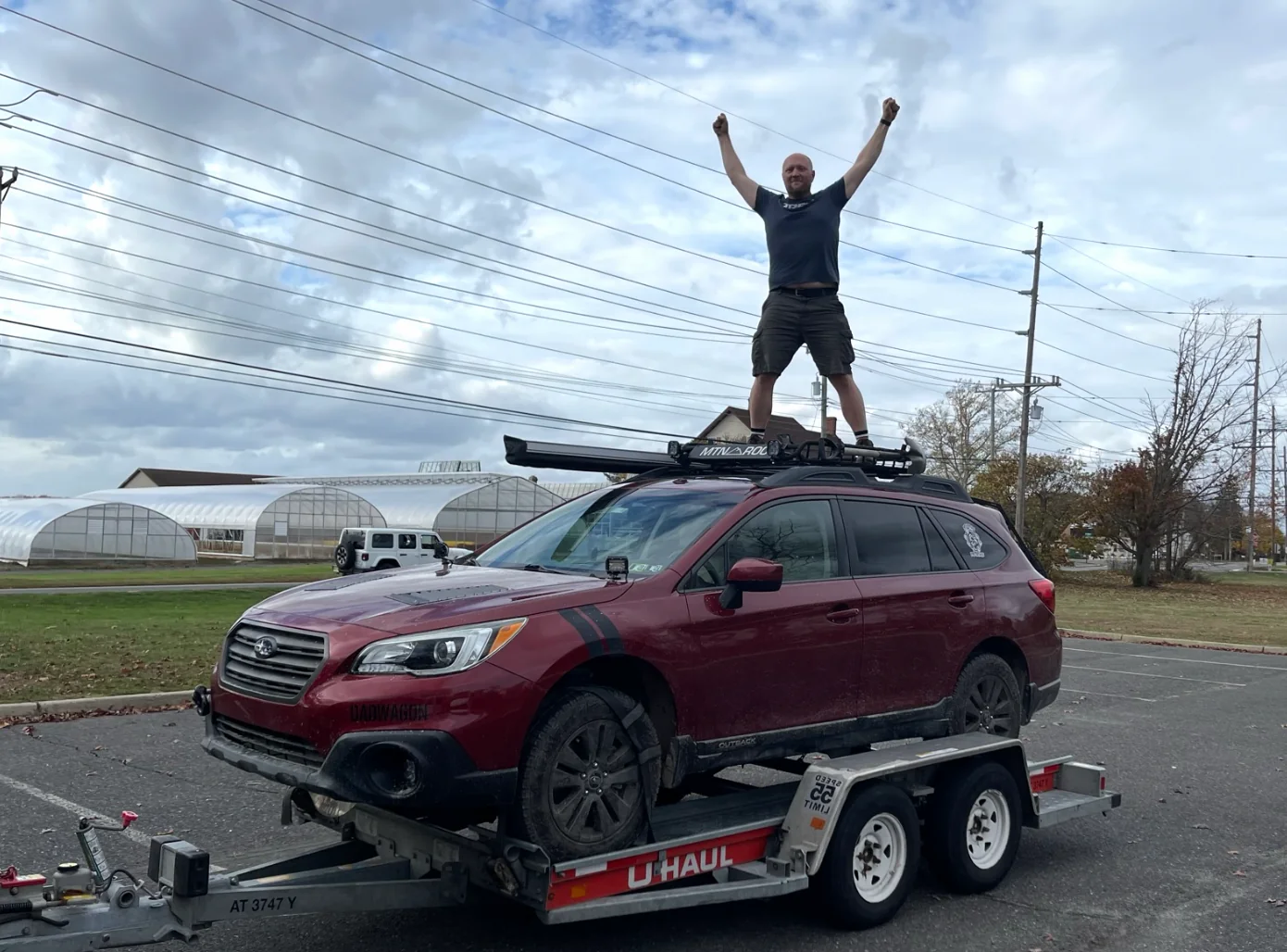
Jim and his group were heading out for a trip. He had already gone through a few puddles without any issues. Everything was working, confidence was high, and the car felt solid.
So when they came up on the next water crossing, he didn’t hesitate. He sent it.
The car made it part of the way through, then just shut off. No warning. Just done. Dashboard lit up, engine wouldn’t restart, and that was it.
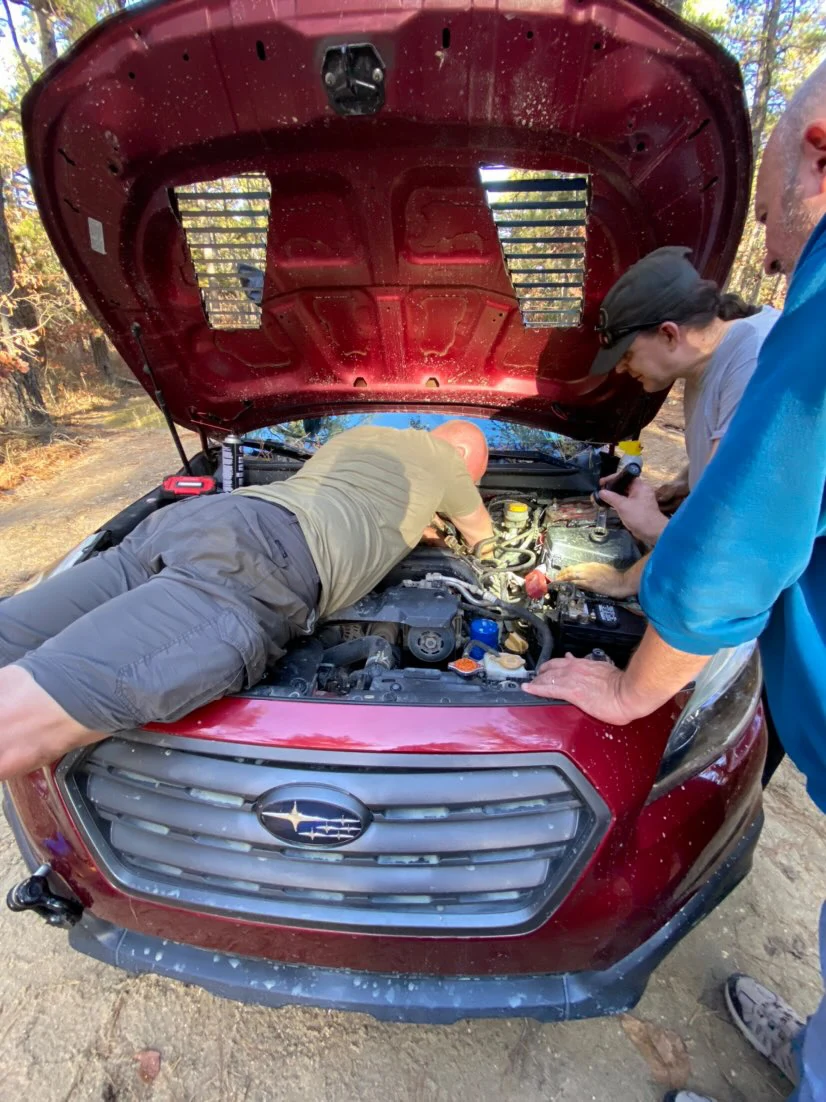
For anyone who hasn’t dealt with this before, hydrolock is exactly what it sounds like. Water gets into the engine, and the engine tries to compress it. The problem is water doesn’t compress. So something has to give. Usually that means bent rods, damaged internals, or a completely locked up engine.
In this case, the engine would not even rotate properly afterward. When they eventually got it apart, there was water throughout the system. It was done. There is no easy fix for that and usually calls for a full rebuild or new engine.
While talking with Jim, we discussed a few things about this situation to help others avoid this costly repair.
It wasn’t just the water. It was the combination of speed, and not knowing exactly what was underneath the surface. This is how it usually happens to Subaru owners. You hit a few obstacles, everything goes well, and you start to trust that the next one will be the same. At some point, it won’t be. Depth changes. Ruts get deeper. The bottom drops out. And if you’re moving too fast when that happens, there’s not much you can do about it.
This is where slowing down actually helps you avoid hydrolock and save money on expensive repairs. Here is my checklist for water crossings:
- First, check the depth. Use a stick. Walk it if you can. If you can’t verify how deep it is, you’re guessing.
- Second, pick your line carefully. Being a couple feet off can be the difference between a safe crossing and a dead engine.
- Third, control your speed. You need steady momentum, not a full send. Too much speed pushes water into places it should not go.
- Fourth, understand your intake height. Stock Subarus do not give you much room for error. Even with a snorkel, you still need to be smart.
- And finally, if the car stalls in water, do not immediately try to restart it. That’s how you turn a bad situation into a much worse one.
Pulling 40,000lbs Of Trash Out Of The Forest
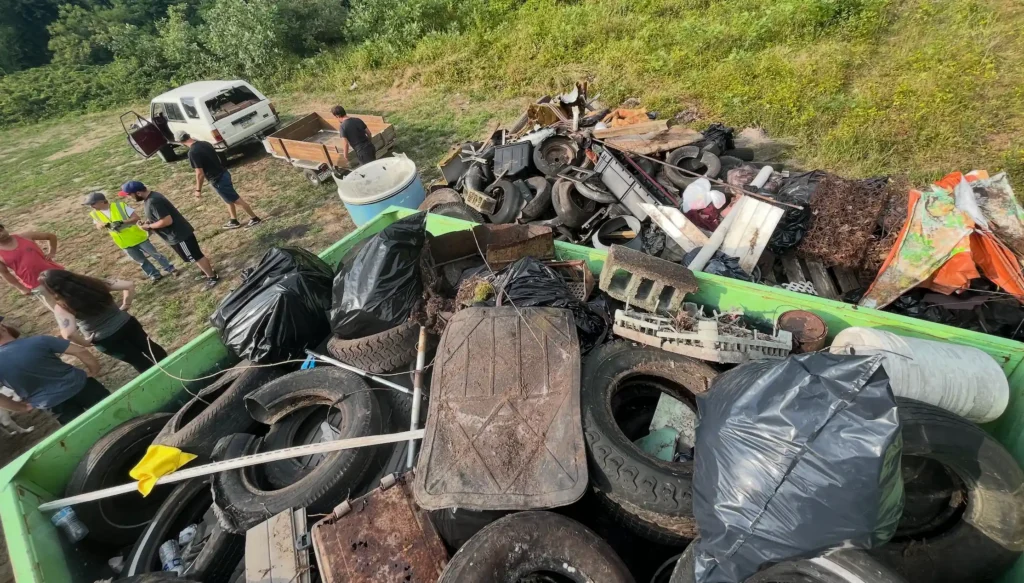
Jim is also part of the Offroad Roos community, and this is where the story goes from cool to genuinely impactful. They are organizing cleanups and pulling trash out of the woods. Over time, they have removed more than 40,000 pounds of garbage from trails. This includes everything from construction debris to full household dump loads, and 100 year old tires.
If you’ve spent any time on public trails, you already know how bad it can get. People dump everything out there, and eventually those areas get shut down because of it. So seeing a group of Subaru owners actually doing something about it is awesome. It also says a lot about the kind of community that’s forming around these cars.
How Do New Subarus Compare To The Classics?
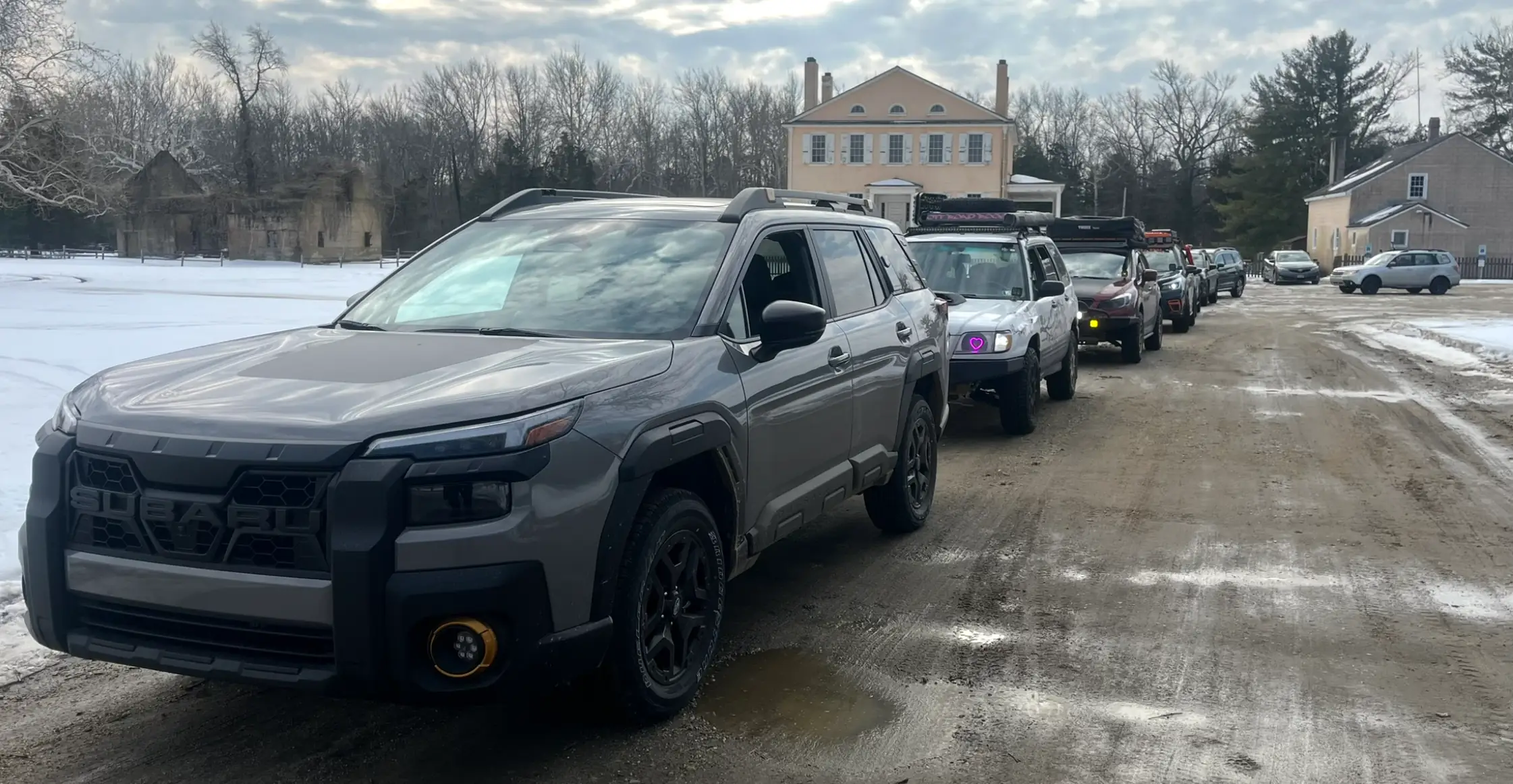
One of the cooler parts of this whole conversation was Jim talking about his time behind the wheel of a brand new Outback Wilderness that Subaru handed over for an event. And not just a casual test drive either. He said it had “13 miles on it when I picked it up,” which is about as fresh as it gets, and they had it for a couple days to run people through trails and see how it actually performed.
What stood out immediately was how it handled off-road even in stock form. His biggest takeaway was how smooth it felt, especially with the updated suspension. He mentioned the electronically controlled rear dampers and said “it’s so smooth… that was the biggest thing that everybody said,” which lines up perfectly with what Subaru is trying to do with these newer platforms.
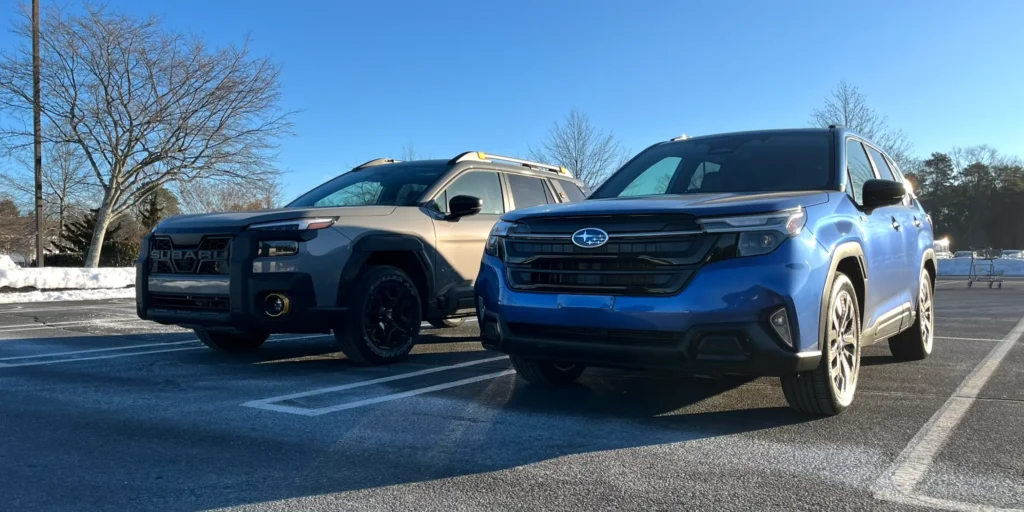
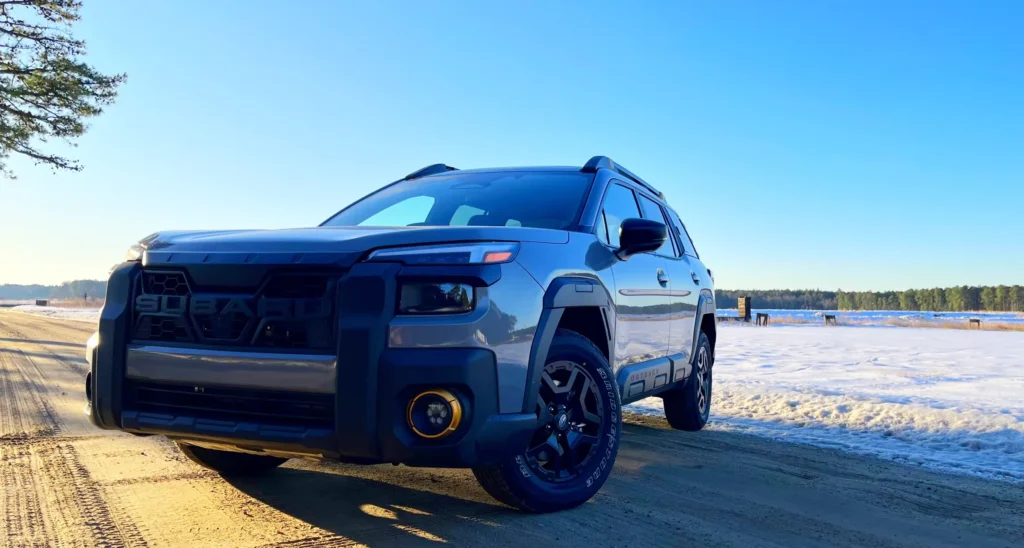
He also pointed out how much better the interior setup is. They moved away from the big tablet-style screen and brought physical controls back, and you can tell he appreciated it when he said “they put physical buttons back… all your HVAC controls are back to physical buttons.” (Thank God) On top of that, you’ve got the camera system, digital gauges, and all the usability improvements that actually help when you’re on a trail.
Me personally, I’m a HUGE proponent of bringing back physical buttons. #maketouchscreenlameagain)
At the end of the day, though, it still comes back to the same thing. These newer Outbacks are getting better in a lot of ways, but they’re still factory vehicles. And even Jim knew that going into it. When they handed him the keys, his reaction was basically, “I’m like… you guys have seen my Instagram, right?” which tells you everything about how that car was about to be used haha.
The capability is there even in stock form, but like everything else, it still comes down to how the car is used. Because no matter how new it is, it doesn’t change what happens if you send it into something that’s deeper than it looks.
I really enjoyed this conversation with Jim. It showcases how important experience is when offroading. The way most people’s offroad journey goes is: you build the car, you take it off-road, and eventually you make a mistake. In this case, it was a water crossing that nuked Jim’s engine. But hopefully the tips in this article can help newcomers avoid these same pitfalls. Because at the end of the day, you can run a good tire setup and a lift, but if you pick the wrong line or hit something too fast, none of that matters. Most of the time, success on the trails comes down to simple decisions, and having experience or secondhand knowledge preemptively.
If you want the full conversation, go check out the DirtSubies Podcast.